
What
Happened to Main Street?

1954

1978
During
the 1960s and 70s, creating vehicle-free pedestrian malls
in older downtown areas was trendy in U.S. urban planning
circles. The idea was to offer a novel alternative to compete
with the new suburban malls that were taking business away
from the older centers. Indeed, some
200 pedestrian malls were built around the country during
that period.
The
concept, however, has proven to be an expensive and almost universal
failure. Today, all but about 30 of those 200 malls have been
ripped up, and traffic - in varying degrees - has been allowed
back into the older commercial areas. As this
article in the New York Times points out, the results
have been very positive.
Helenans
have argued for years about modifying the Main Street mall to
accomodate traffic, but as of this writing, Helena is one of
a dwindling handful of communities in the U.S. still clinging
to this outmoded idea.
Building
Helena's mall required the closing of Main Street to motor vehicle
traffic from about State St. north to Sixth Ave. The street
was re-paved for pedestrian use, a fake stream was plumbed-in
on a portion of the mall, carved stone architectural elements
from demolished Victorian buildings were laid about, several
new sculptures were placed, and landscaping was done.
The
mall was developed in two phases from 1973 to 1977. Phase I
was from the south end of Main to Broadway, Phase II from Broadway
north to Sixth Ave. The total cost was $54 million in public
and private funds, which translates to about $200 million in
today's dollars -- and you can't even drive on it.
Most
of these early photos of the Urban Renewal Program's pedestrian
mall and adjacent areas were taken in the 1970s by Virgie
Millegan Baird (1921-1999); photos by other contributors
are so noted.
|
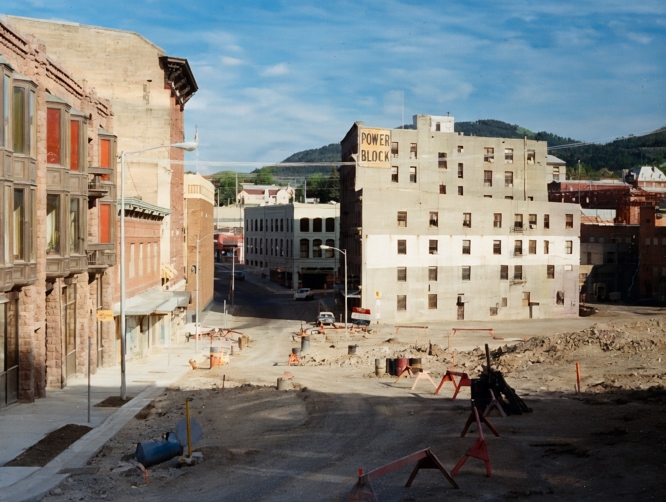
Destruction on
6th Avenue - Former Site of the Electric Block
Cruse Avenue Under
Construction
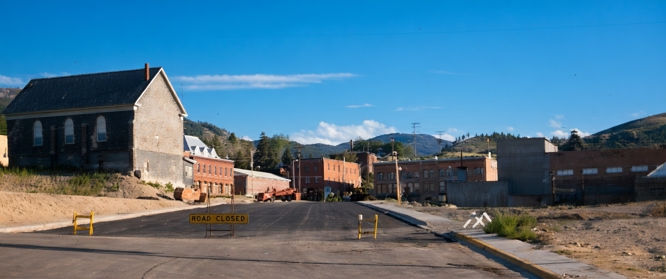
| Grand St.
once crossed here. The building on the left once served as the
Methodist Episcopal Church. |
Construction on
the Former Site of Grand St.

The 1913 Placer Hotel
is on the right.
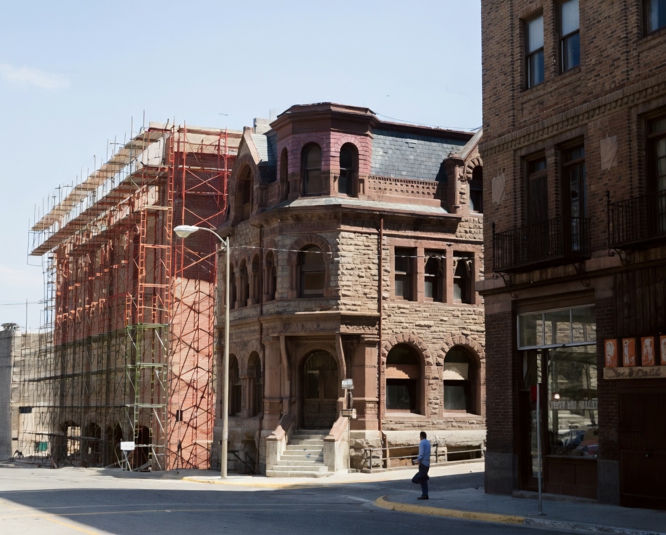
The Arcade Building
Under Construction
The Atlas Block and Adjacent Buildings, Main at Broadway, Winter 1973-74

PHOTO
BY WALLACE "SKIP" MILLEGAN JR. (1951-1982) • COLLECTION
OF KENNON BAIRD
Old KCAP Studios
in the Atlas Block, ca. 1976

|
Vacant storefront
in the Atlas Block. This space was once the studios of KCAP
radio. Above the door can be seen the ghost of the KCAP sign.
For more about KCAP, click here.
|
 |
Click
the Audio Link to hear a short 1965 KCAP on-air clip.
Courtesy of Frank Cuta. Thanks, Frank! |
The 1890 Boston
Block and a portion of Dorothy's
Rooms, winter 1973-74

PHOTO
BY WALLACE "SKIP" MILLEGAN JR. (1951-1982) • COLLECTION
OF KENNON BAIRD
Walking Mall,
Looking South Near Broadway, ca. 1975
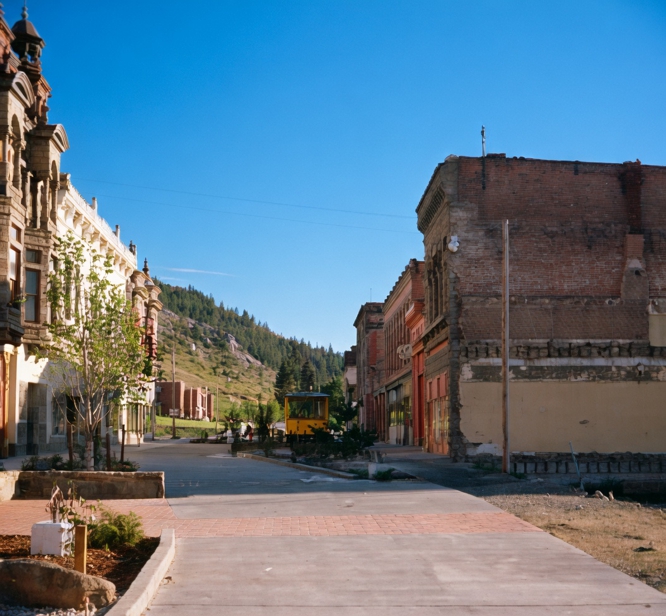
Restored
Trolley, ca. 1975

Walking Mall,
Looking North
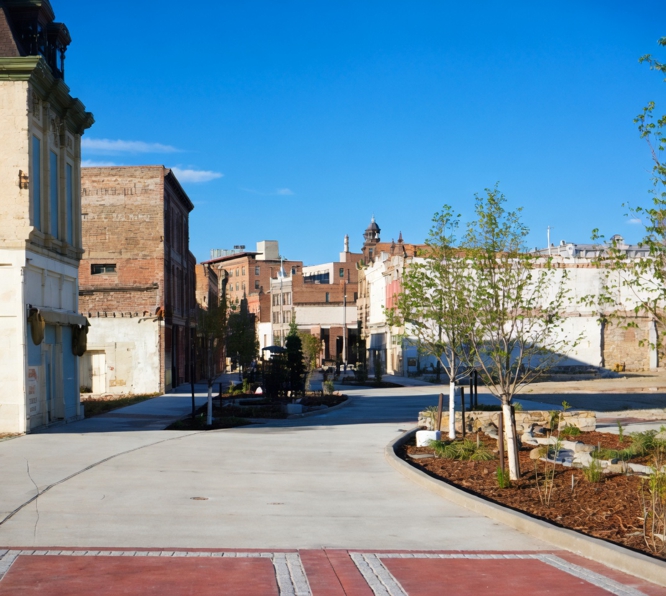
The 1888 Colwell
Building is on the left.
Vacant Storefront
in the Colwell Building
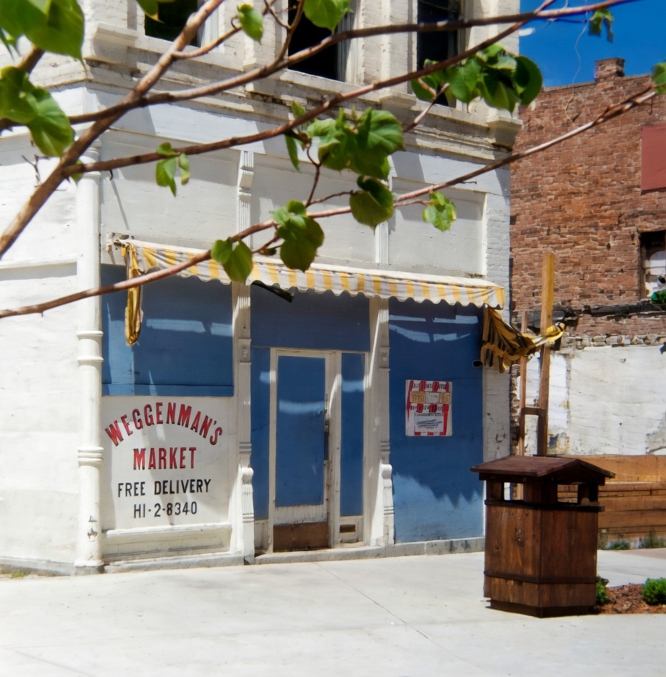
Weggenman's Market
occupied this space for decades...

Landscaping on
the South End of the Mall
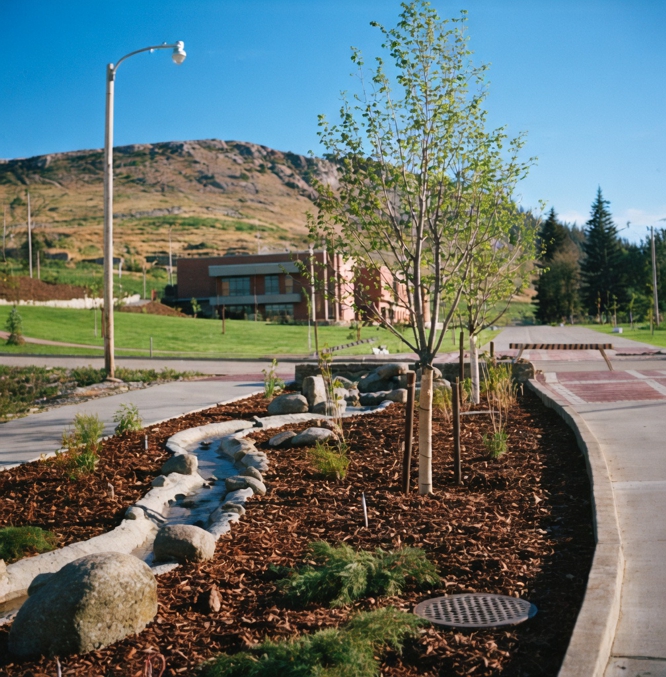
The faux stream
burbles along its concrete course.
Site of the City-County
Library and Federal Building
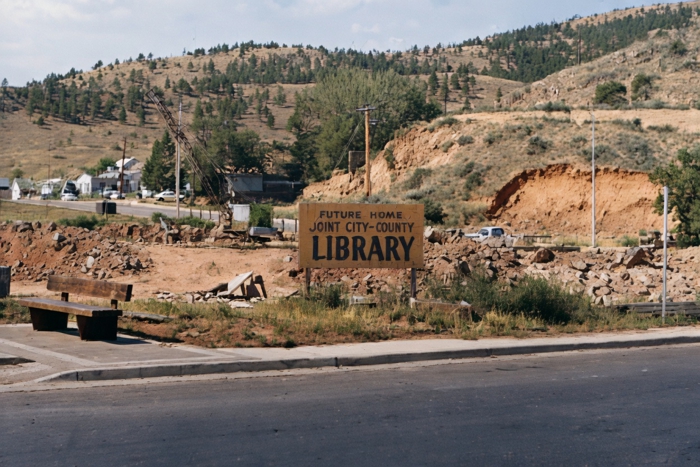
COURTESY OF DAVE THOMAS
The site
a few years later...

Notice
how the fortress-like Federal Building and the bland library
spoil a perfectly nice view.
The new
lampposts are similar in design to those installed in Helena
during the1920s. The Independent Record reported in
1976 that these lamps, and other new mall fixtures, had been
vandalized to the tune of $3,000 (about $11,000 today) in
just two years.
|
Looking West
on Broadway from the Mall
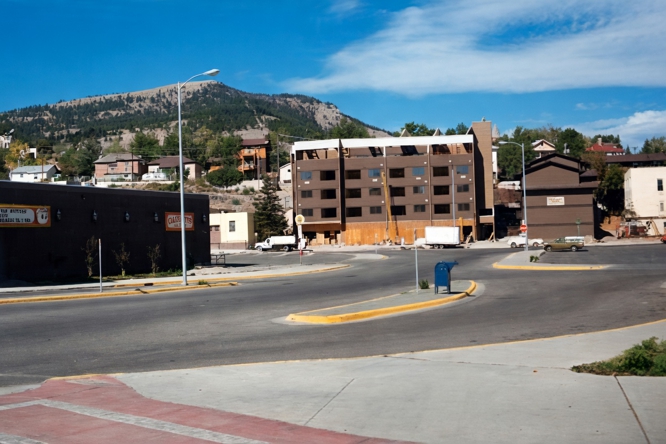
The grand stage
of the Marlow Theatre once occupied this site. The Gaslight Cinema
is on the left.
Cruse Ave. Pedestrian
Underpass
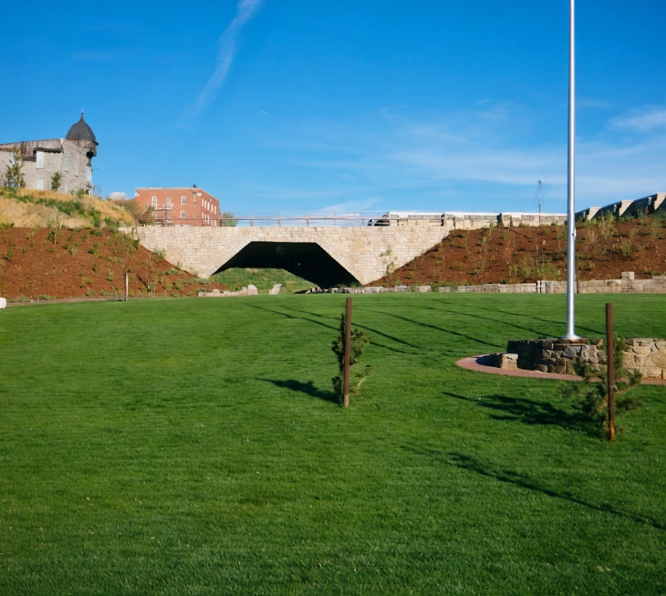
Prominent on
the left is the 1889 Bluestone House.
The Bluestone
House and Fire Tower, September 1970
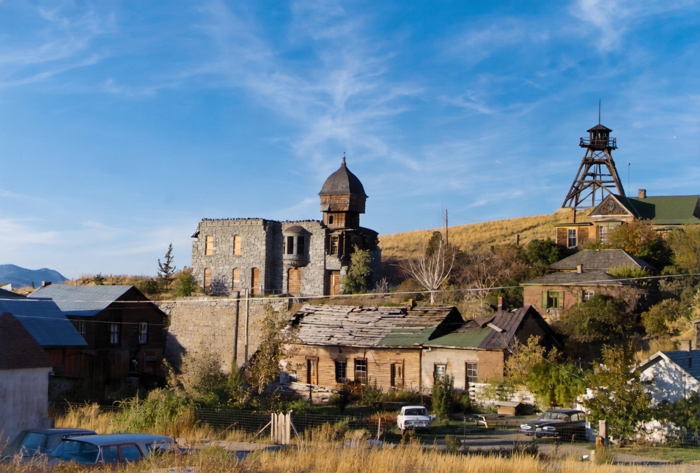
PHOTO
BY ARNIE ROGERS • COURTESY OF PATRICIA ROGERS GLISSON
CLICK
ON IMAGE FOR A BIG VIEW IN A NEW WINDOW
| This
handsome photo by the late Arnie Rogers shows part of the old
city just months before it was razed during the Urban Renwal project.
The Bluestone House and Fire Tower still stand. |
The Bluestone
House and Fire Tower, Winter 1973-74

PHOTO
BY WALLACE "SKIP" MILLEGAN JR. (1951-1982) • COLLECTION
OF KENNON BAIRD
The Bluestone
House and Fire Tower, mid-1970's

COURTESY
OF DAVE THOMAS
|


